Everything I Needed to Know About AEO, I Learned Teaching Composition
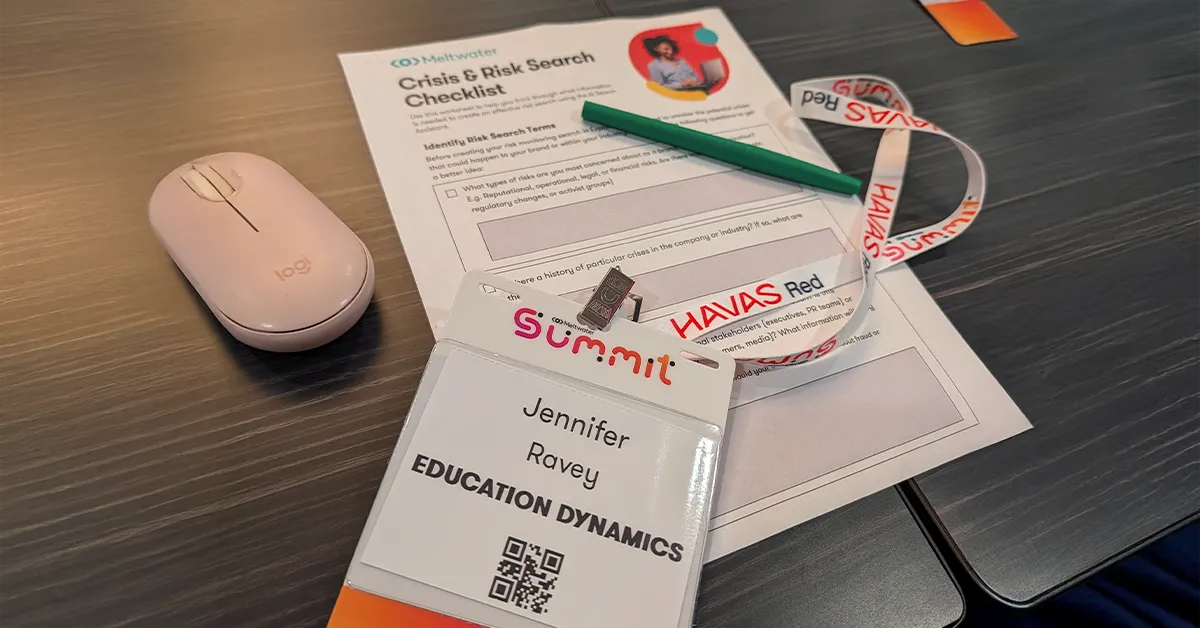
I spent last week at Meltwater Summit surrounded by PR specialists and digital marketers, all of us trying to wrap our heads around the rapid shift in the past year and a half from straight SEO to AEO – answer engine optimization. The room buzzed with concerns about LLMs, algorithm changes, and what this all means for content strategy. The statistics are staggering. According to SparkToro, 60% of Google searches now end without a click…[and] when AI Overviews appear, it’s 83%. Speakers talked frequently about “visibility,” “discoverability,” and over and over again: “citations.”
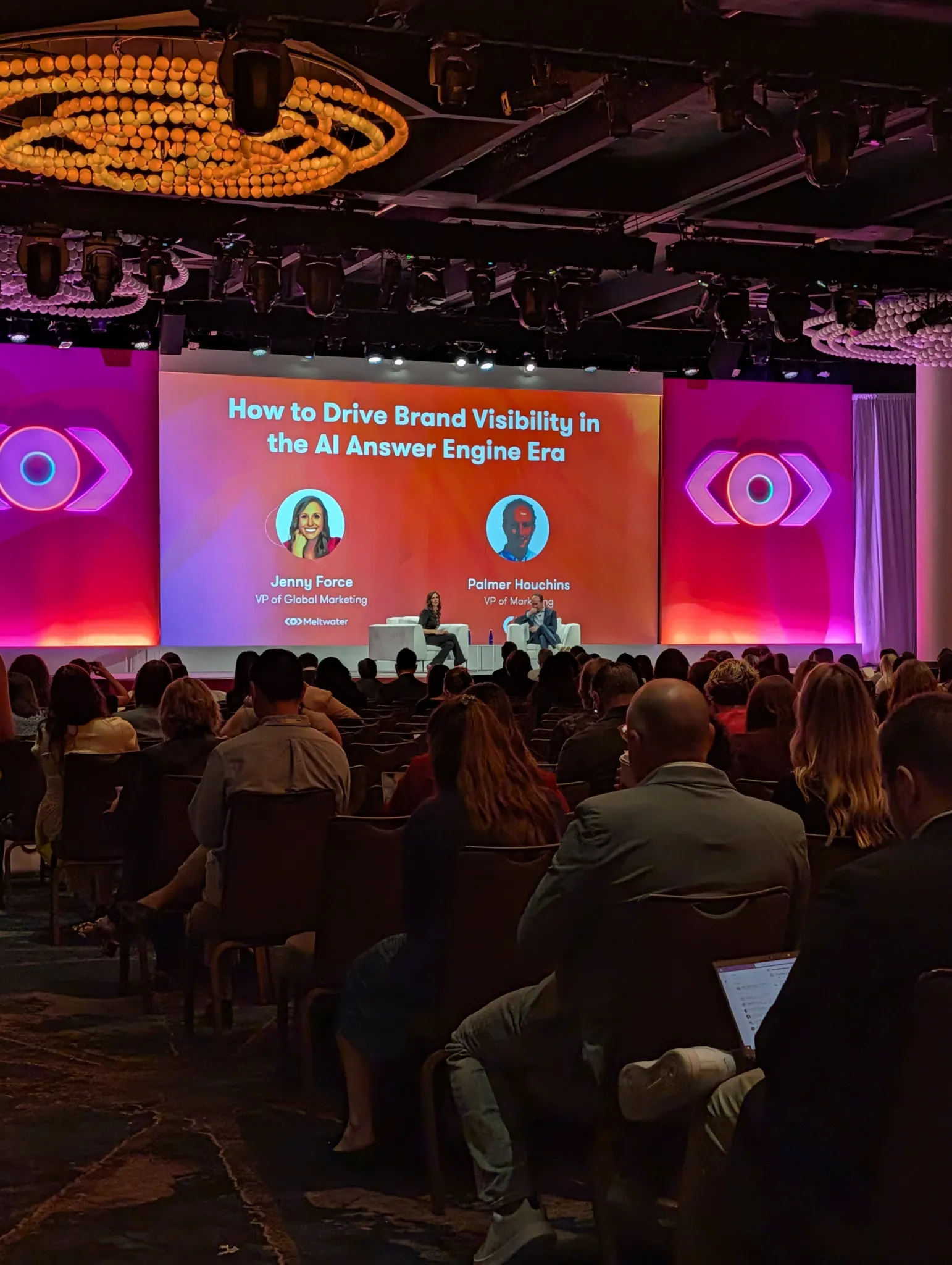
Citations. I thought to myself how funny it was that I was hearing this word feature so prominently in 2026 at a marketing conference.
I spent 17 years as an English instructor at a state university, teaching research writing and composition. Let me tell you: Getting students to understand the importance of citations was one of the hardest parts of the job. Explaining why they couldn’t just grab some text from Wikipedia, why source credibility mattered, why citation chains revealed the strength of an argument, why a strong bibliography is a gold mine. It was a constant uphill battle against the “I found it on Google, so it must be true” mentality.
Sitting in the ballroom at the Marriot Marquis in the middle of Times Square, I had a sudden realization: I’ve been training for AEO my entire career.
The English Degree No One Wanted
The irony is not lost on me; I’ve spent years hearing about how “useless” liberal arts degrees are. I directed a writing center where again and again, I emphasized the necessity of communicating clearly and reassuring English majors that they could compete in the marketplace.
And now I’m watching an entire industry scramble to understand principles I spent nearly two decades teaching.
AEO isn’t some revolutionary concept that requires us to throw out everything we know. It’s actually a return to fundamentals that composition instructors have been championing forever. Credibility matters; depth beats superficiality; structure enables understanding; and being cite-worthy is more valuable than gaming the system.
The difference is that now, instead of teaching 20-year-olds how to evaluate and cite sources, I’m watching LLMs do it at scale, and marketers are finally being forced to care about the same principles of credibility and authority that academics have valued all along.
Why Everyone’s Confused (And I’m Not)
The confusion around AEO makes sense if you’ve spent your career in SEO and digital marketing. For 20+ years, the game was largely about optimization. Publish a lot of blogs. Make sure they have the requisite keywords. Backlinks, backlinks, backlinks. Quality mattered, sure, but tactics often mattered more.
AEO is different. LLMs aren’t as easily impressed. Instead, LLMs are essentially doing what I taught my students to do. They’re evaluating source credibility, following citation chains, looking for comprehensive coverage, and determining what’s actually worth citing. And getting better at it all the time.
A quick glance at the Meltwater Summit agenda shows everyone is asking a version of “How do we get cited?” The composition instructor in me wanted to say: “By being credible, comprehensive, and authoritative.”
The Research Writing Framework for AEO
What I realized sitting in those sessions was that the rubric I used to grade research papers maps almost perfectly onto what makes content “AI-citable.”
When I evaluated student papers, I looked for:
- Source credibility – Were they citing authoritative, primary sources or random websites? (Notable student citations included a teacher’s 3rd grade class blog about literature)
- Citation chains – Did their sources build on established scholarship, or were they isolated claims?
- Depth of coverage – Did they actually understand the topic, or just skim the surface?
- Clear structure – Could I follow their argument? Were ideas organized logically?
- Original contribution – Did they understand enough to synthesize an argument, or did they just regurgitate what others said?
- Purpose – Did the paper answer a specific question or just ramble?
Now look at what AEO experts say LLMs reward:
- Domain authority and E-E-A-T (Experience, Expertise, Authoritativeness, Trustworthiness)
- Being cited by credible sources (not just having citations)
- Comprehensive topic coverage
- Structured data and clear hierarchy
- Original research and proprietary insights
- Content that definitively answers questions
It’s the same framework, the same principles. Just applied at machine scale instead of evaluating one paper at a time.
Now, I need to be honest that the parallel isn’t perfect. If you had asked me as a composition instructor whether students could cite Reddit in their research papers, I would have likely said no (there is always nuance in teaching so never say never). Yet LLMs cite Reddit constantly, often more than traditional authoritative sources.
Does this mean the academic model was too narrow? Or that LLMs are too permissive? Here’s the thing. I’m largely referring to teaching intro to research in a composition classroom, e.g. a freshman writing his first research paper on The Great Gatsby. At that level, Reddit absolutely isn’t appropriate. However, as writers mature and tackle different types of arguments beyond literary analysis, the calculus changes. A professional writing about user experience, technical troubleshooting, or consumer sentiment? Reddit might be exactly the right source for capturing authentic voices and real-world experience.
Context matters. Purpose matters. A narrow definition of credibility served my composition students well, but LLMs are operating in a much wider content ecosystem where different types of authority are valid for different purposes.
The composition instructor in me is learning to be more flexible. The marketer in me recognizes we’re watching authority evolve to match how people actually seek and share information.
Writing for Your Audience (Even When That Audience is a Machine)
Another fundamental I drilled into my students was to know your audience. Every writing decision depends on who you’re writing for. A research paper for an academic journal reads differently than an op-ed, which reads differently than a listicle blog.
AEO hasn’t changed that principle. It’s just added a new primary audience.
Like it or not, AI is now your biggest audience. Before a human ever sees your content, an LLM has already decided whether it’s worth citing, summarizing, or surfacing. You’re still writing for humans, and clarity, usefulness, and engagement still matter. But you’re also writing for the machines that will determine whether humans ever find you in the first place.
This is uncomfortable for a lot of people, and I get it. It feels like we’re optimizing for robots instead of people, but good writing for LLMs is good writing for humans. The difference is intentionality. Just like I taught students to think consciously about their audience’s expectations and needs, we now need to think consciously about how LLMs will parse, understand, and evaluate our content.
What This Means for Higher Education Marketing
Here’s where this gets particularly interesting for my world. I’m now the Director of Social Media at Education Dynamics, working primarily with higher education clients on brand visibility.
And higher education institutions? They’re uniquely positioned for AEO in ways most organizations aren’t.
Universities aren’t just creating content; they’re creating original research. Faculty aren’t just employes. They are subject matter experts with actual credentials. Academic programs aren’t just services. They’re built on decades of established scholarship and peer-reviewed knowledge.
In other words, higher ed institutions ARE the primary sources that LLMs should be citing.
But there’s aproblem: Most higher education marketing doesn’t position the institution that way. The industry has been so focused on rankings, traffic, and lead generation that we’ve hidden our greatest advantage, our actual authority.
If there was ever a moment for higher ed to lean into what makes it different, AEO is it.
The Series Ahead
Over the next few weeks, I’m going to break down the specific parallels between research writing principles and AEO strategy. We’ll dig into:
- Source credibility: How the CRAAP test I taught students maps to E-E-A-T, and why being cite-worthy beats chasing citations
- Citations chains and depth: Why one comprehensive resources beats 50 shallow blog posts, and how academic citation patterns mirror what LLMs value
- Structure and purpose: How the thesis statement, topic sentences, and “so what?” factor translate directly to AI-citable content
Each post will include specific applications for higher education because if any industry should understand how to leverage credibility and authority, it’s us.
The Bottom Line
AEO isn’t bewildering when you view it through a research literacy lens.
It’s just marketing finally catching up to what English teachers have been saying all along: Credibility matters.
Turns out that “useless” degree was preparing me for exactly this moment.