The Website Visit Is Now the Last Step
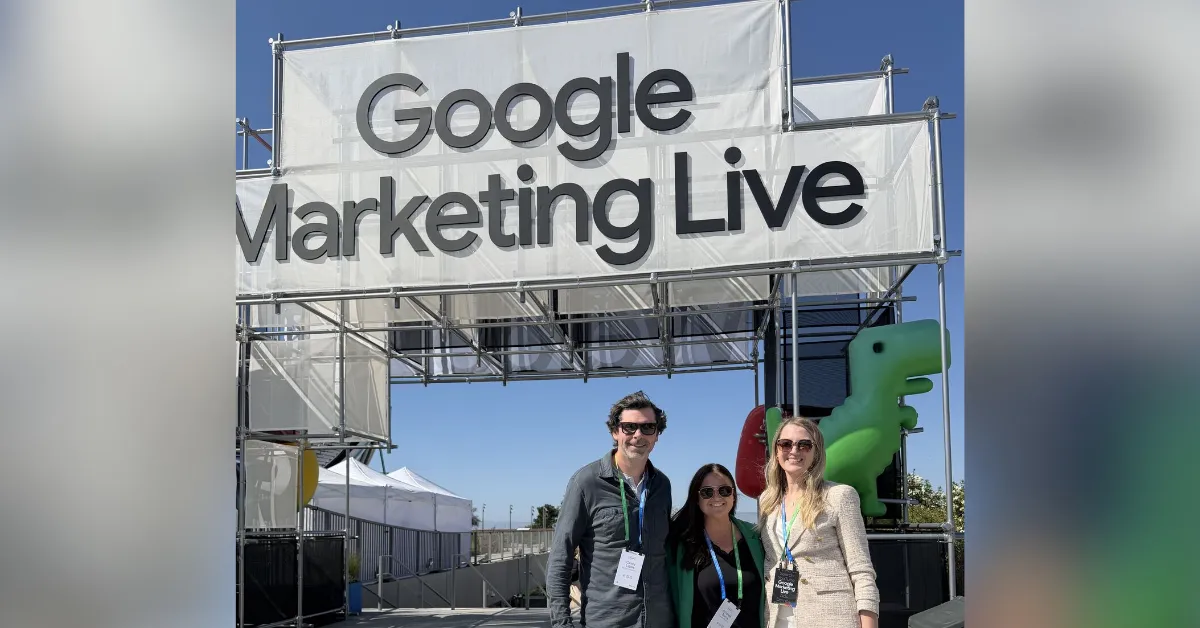
Key Takeaways from Google Marketing Live 2026
I just got back from Google Marketing Live, and the most important thing I saw wasn’t a product announcement. It was confirmation that the marketing funnel as we historically know it has collapsed, and most of higher ed isn’t yet operating as if that’s true.
Prospective students no longer use Google the way they did even two years ago. They aren’t typing in a program name, clicking through a few results, visiting some campus websites, and building a shortlist manually. That work now happens inside AI platforms (ChatGPT, Claude, Google’s AI Mode, AI Overviews) before a prospective student ever reaches your website. By the time they land on your site, they’ve already evaluated your institution, compared it against alternatives, validated what they found through social channels, and largely decided whether you’re the right fit. The website visit isn’t where their decision starts anymore It’s the validation of the decision they reached somewhere else.
That somewhere else is a place most institutions aren’t showing up. Yet.
Visibility Has Moved.
Most Institutions Haven’t.
The awareness and consideration work your website, paid search, and organic SEO used to do is now being performed by AI-generated answers your institution may or may not appear in. If your brand isn’t being surfaced, cited, and accurately represented inside those responses, you aren’t losing ground at the bottom of the funnel. You’re losing consideration before your funnel ever starts.
Our 2026 Marketing and Enrollment Management Benchmarks revealed that nearly 60% of online learners now start their college search by typing a specific institution’s name. That’s a 354% increase in brand-first searches since 2015. Students aren’t discovering you inside the search box anymore. They’re arriving at the search box already knowing your name, or already not knowing it.
Google was explicit about this at GML. Organic visibility inside AI Mode will favor institutions that lead with what only they can uniquely say, that prioritize authentic student experiences and real human voices, and that structure their content so both users and AI agents can understand and trust it. That isn’t a technical SEO checklist. It’s a brand and content strategy problem, and most marketing teams aren’t currently organized to solve it.
This is the gap Signal Engineering was built to close. It’s the framework we’ve been developing at EDDY: the intentional construction of brand signals that help institutions get seen, trusted, and chosen in an AI-mediated environment. The Brand Discoverability Pyramid we introduced earlier this year sits inside that framework. GML didn’t introduce these problems. It confirmed them.
The Best Ad Is Now a Conversation
Paid search has shifted just as significantly as organic discovery. Google announced new ad formats inside AI Mode, including a feature called Business Agent for Leads, built around the AI conversation itself rather than the click. Google called out the education industry specifically as one of a handful of verticals getting early access to these in-ad AI conversations and in-ad lead forms, both pulled directly from your institution’s own content.
As a 2026 Google Premier Partner, EDDY was in the room for those announcements. My read: the institutions that move quickly to align their content strategy with these new ad surfaces will build an advantage that will be difficult to close later. The ones who wait will spend the next two years catching up to competitors who already own the conversation.
This Isn’t a Future Problem
The adoption gap is what should be worrying to leadership teams. Our data on AI in higher ed marketing shows that nearly 48% of enrollment leaders already report measurable impact from AI integration on their enrollment funnel. The institutions adopting fastest are the ones pulling ahead now, and the ones who will continue to expand the gap between success and invisibility.
There’s a larger reframe happening too. Search Everywhere Optimization isn’t a rebrand of SEO. It’s a structural reset for how visibility works when prospective students are asking questions on Google, ChatGPT, TikTok, Reddit, and voice assistants simultaneously. Institutions treating those as separate channels are leaving meaningful ground uncovered. And institutions deprioritizing SEO entirely are walking away from the foundation that still anchors everything else.
The question for your institution isn’t whether this shift is real. It is. The question is whether your current marketing strategy was built for the environment that exists today, or the one that existed three years ago.
If you’re a marketing or enrollment leader wondering whether your institution is showing up where prospective students are actually making decisions right now, that’s the right question to be asking. More from us on what to do about it soon.